PP vs PET: Which Performs Better for Plastic Food Packaging in Europe?
Table of Content
- Why Europe Is Reconsidering Plastic Food Packaging in 2025
- PP Plastic Food Containers: For Hot, Microwavable, and Delivery Meals
- PET Plastic Food Containers for Clear Display and Cold Foods
- PP vs PET: Key Differences in Plastic Food Packaging for Europe
- Choosing the Right Plastic Food Packaging for Europe
Why Europe Is Reconsidering Plastic Food Packaging in 2025
Regulatory Pressure on Plastic Food Packaging in Europe (PPWR)
Europe’s takeaway, delivery, and foodservice sectors continue to expand, driving growing demand for recyclable food packaging that can perform reliably in high-volume use cases.
At the same time, plastic food packaging across Europe is facing increasing regulatory scrutiny under the Packaging and Packaging Waste Regulation (PPWR).
As a result, material performance and regulatory suitability are now weighed as heavily as cost efficiency in packaging decisions.
Key Performance Factors Buyers Consider when Selecting Plastic Food Containers
Nowadays, when selecting plastic food containers, European distributors typically evaluate several core performance factors:
- Heat resistance and microwave suitability, especially for reheated meals
- Transparency for food display, particularly in retail and grab-and-go settings
- Strength and leak resistance during delivery and transport
- Recycling compatibility across Europe, including material identification and sorting
- Food-contact safety compliance under regulations
PP and PET as the Two Most Widely Used Plastic Food Packaging Materials in Europe
Polypropylene (PP) and polyethylene terephthalate (PET) dominate European plastic food packaging due to their proven performance, regulatory familiarity, and established supply chains. While both materials are widely accepted, they serve different functional roles depending on temperature requirements, application scenarios, and recycling considerations.
In the following sections, we outline the critical differences between PP and PET to help distributors better evaluate which material performs best for specific plastic food packaging needs in Europe.
PP Plastic Food Containers: For Hot, Microwavable, and Delivery Meals
Heat-resistant for Microwave Use and Reheating Applications
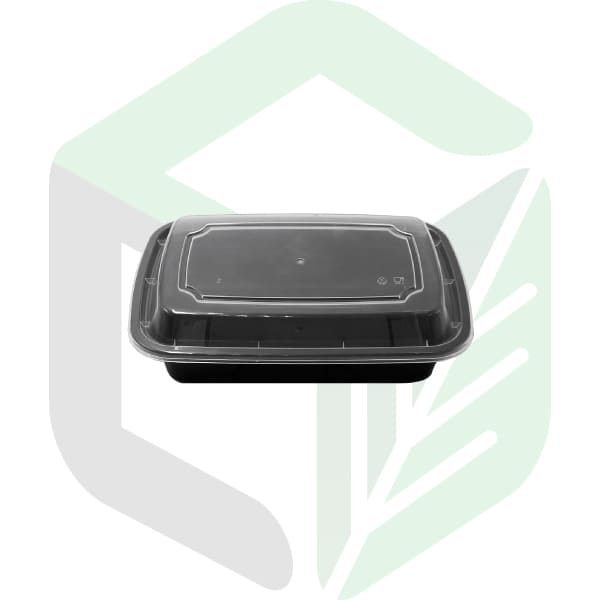
PP containers are widely used for hot meals due to their strong heat resistance. They can typically withstand temperatures of up to approximately 110°C, allowing them to remain stable during reheating and microwave use.
This makes PP a practical option for foodservice operations where meals are prepared, delivered, and reheated in the same container.
Structural Durability for Delivery and Takeaway Operations
Durability is another key advantage of PP in delivery-focused foodservice models. Its high impact resistance helps reduce cracking or deformation during transport.
When paired with secure lids, PP containers support long-distance delivery, stacked transport, and high-volume takeaway operations while maintaining product integrity.
Oil-resistant and Chemically Stable Performance for High-Fat and Acidic Foods
PP performs reliably with oily, acidic, or sauce-heavy foods. Its oil-resistant and chemically stable properties help maintain structural integrity even under demanding foodservice conditions.
This makes PP containers suitable for a wide range of cuisines, including dishes with high fat content, strong seasonings, or liquid components.
Recyclability Considerations in the European Market
PP is classified as plastic resin code #5 and is recyclable within Europe, although collection and processing availability varies by country.
Design plays a critical role in recyclability. Single-material PP containers paired with matching lids improve sorting efficiency and recycling compatibility within European waste management systems.
When PP Is the Right Choice?
Overall, PP is a highly practical material for hot meals, microwave use, and delivery applications where heat resistance and durability are required.
However, for cold food applications with high transparency requirements, such as salads, sushi, and retail display formats, PET offers distinct advantages. The following section provides an overview of PET’s performance profile and typical use cases.
PET Plastic Food Containers for Clear Display and Cold Foods
High-Transparency Packaging for Retail Display and Grab-and-Go Meals
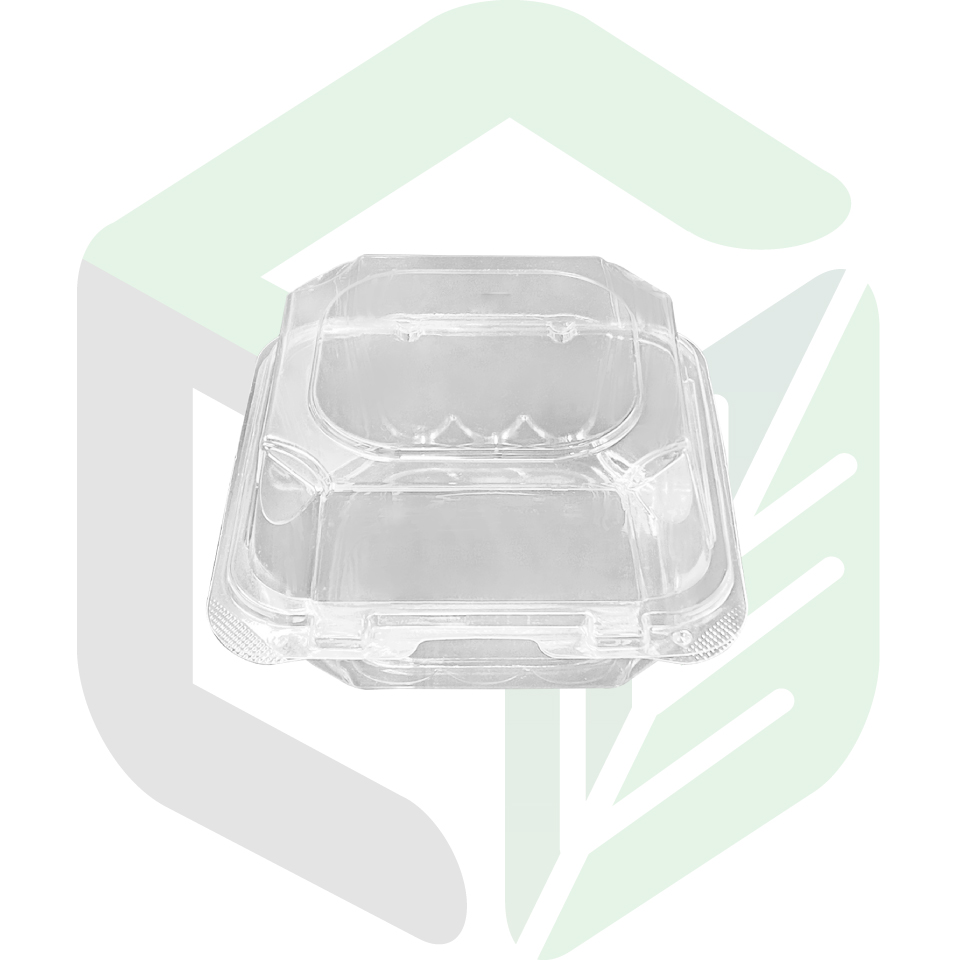
PET containers are widely valued for their high level of transparency, making them especially suitable for retail display and grab-and-go food formats. Clear presentation allows consumers to easily view the product inside, supporting purchase decisions at the point of sale.
This visual clarity supports effective visual merchandising and aligns well with social-media-driven food marketing, where presentation plays an important role in product selection.
Performance in Cold and Chilled Food Applications
PET containers with lids are commonly used for cold and chilled food applications across Europe, including salads, desserts, cold noodles, and ready-to-eat meals that require clear presentation and stable storage conditions.
PET performs reliably in refrigerated and cold-chain environments, maintaining shape and clarity during storage and transport. However, due to its lower heat resistance, PET is not suitable for microwave heating, and this limitation should be clearly communicated in product use guidelines.
The Most Widely Recycled Plastic Material in Europe
PET is classified as plastic resin code #1 and is recognised as one of the most widely recycled plastic packaging materials in Europe. The region benefits from a well-established recycling infrastructure for PET, supporting high collection and reprocessing rates across many markets.
Existing recycling streams, including bottle-to-bottle and tray-to-tray processes, reinforce PET’s role in recyclable food packaging and contribute to its broad acceptance among European distributors and food brands.
Barrier Performance for Chilled and Ready-to-Eat Foods
PET lids provide effective barrier performance for cold food products. Their material properties help reduce moisture loss and limit aroma escape, supporting product freshness and presentation quality.
This makes PET a practical option for chilled and ready-to-eat food packaging applications short-term storage stability is required.
When PET Is the Preferred Option?
Overall, PET is commonly used for cold food and retail display applications that require transparency, stable cold-chain performance, and compatibility with established recycling systems.
This includes ready-to-eat and grab-and-go formats across European markets where visual presentation remains an important consideration.
PP vs PET: Key Differences in Plastic Food Packaging for Europe
When selecting plastic food packaging for the European market, distributors and importers must balance performance requirements, regulatory compliance, recyclability infrastructure, and cost efficiency. Both PP and PET are widely used materials, but they serve distinct roles: PP excels in hot food applications requiring microwave compatibility, while PET is optimal for cold foods requiring high transparency and visual appeal.
The table below compares PP and PET across six critical criteria—including use cases, heat resistance, and recyclability—to help you make informed material decisions for European markets.
Quick Selection Guide
- Choose PP for: hot food, microwave use, delivery applications, and oil-heavy, sauce-heavy, or acidic foods
- Choose PET for: cold food, retail display, and grab-and-go formats that prioritise transparency and recycling compatibility
| Criteria | PP | PET |
| Plastic resin code | #5 | #1 |
| Best-performing use cases | Hot meals, delivery, oily and sauce-heavy foods | Cold foods, retail display, ready-to-eat meals |
| Heat resistance & microwave use | Heat resistance up to 110°C; | Heat resistance up to 60°C; |
| Advantages | Durable, oil-resistant, and chemically stable; | High transparency, strong barrier performance, and excellent recyclability; |
| Recycling infrastructure in Europe | Varies by country; | Highly developed and widely available across European markets |
| Example Packaging Formats |
|
|
| Microwavable PP Rectangular Lunch Boxes 24oz | PET Clear Clamshell Box _6 Inches |
Choosing the Right Plastic Food Packaging for Europe
PP remains the more practical option for hot meals (up to 110°C), microwave use, and delivery-focused foodservice applications where heat resistance, durability, and chemical stability are critical. By contrast, PET is the preferred choice for cold food and retail display applications where visual presentation plays a key role in purchase decisions.
There is no single “best” material for plastic food packaging. The appropriate choice depends on application needs, recycling infrastructure maturity, and regulatory compliance considerations within each market. For distributors and importers, this means material selection should balance three factors: functional performance for the intended application, compliance with PPWR recyclability requirements, and compatibility with target market recycling infrastructure.
If you are evaluating plastic food packaging solutions for specific markets or applications in Europe, ENPAK is a reliable partner for material selection and packaging support. Contact us to discuss packaging design, compliance considerations, and sourcing solutions tailored to your business needs.
